

Nearly 40% of wedding guests regret their outfit by the end of the night - usually due to discomfort, poor fit, or a style that felt out of place - leaving dresses unworn and money wasted. To avoid that, match the invitation’s dress code, pick season‑appropriate fabrics (linen, organic cotton, TENCEL, or velvet for winter), and favor reliable fits and timeless silhouettes so the dress is comfortable, appropriate, and wearable beyond the event.
- Why Choosing the Right Wedding Guest Dress Matters:...
- Understanding Dress Codes, Seasons, and Styles: Essential Foundations...
- A Step-by-Step Guide to Choosing Your Perfect Wedding...
- Dress Mistakes Wedding Guests Make (And How To...
- Dressing With Confidence: Trusted Resources and Tools For...
- Feel Good, Look Right: Your Confident Path to...
Why Choosing the Right Wedding Guest Dress Matters: Avoiding Common Regrets and Wasted Costs
Nearly 40% of guests wish they’d chosen a different dress by the end of the wedding night - most often because of discomfort, poor fit, or a style that felt out of place. Regret lingers. The dress sits unworn, money lost, and your memories colored by distraction instead of celebration.
You want more than a dress that just checks the "formal attire" box. The right choice lets you forget about your outfit and focus on the moment. A mindful, step-by-step approach shifts you away from last-minute buys and one-off impulse picks. Instead, you’ll find a piece that feels like part of you - one that suits the dress code, feels soft on your skin, and works for more than a single occasion.
Style shouldn’t mean discomfort. Matching dress code to real comfort, weighing lasting fabrics, and choosing timeless shapes over fleeting trends - these are the quiet moves that lead to confidence. No need to chase every seasonal look or guess what’s “right.” Small, intentional choices add up. The result: a guest dress that reflects your values and brings ease to the celebration. For a slower, more thoughtful way to occasion dressing, start with our gentle philosophy for finding special pieces you’ll love.
Understanding Dress Codes, Seasons, and Styles: Essential Foundations Before You Shop
Dress codes shape what’s appropriate for a wedding guest. Terms like black tie, cocktail, or casual tell you how formal your outfit should be, which fabrics to reach for, and what colors or lengths feel right. Following the invitation’s cues shows care for the hosts and helps you blend in comfortably.
Each dress code has its own rhythm. Black tie asks for a full-length gown in deep, elegant tones - paired with refined shoes and accessories. Cocktail attire means a knee-length, tea-length, or midi dress, or a softly tailored jumpsuit, always with formal shoes. Denim and anything overly showing? Not for cocktail. Casual events welcome lighter fabrics and mid-length florals, but skip anything that feels like everyday loungewear. Our guide on what exactly is a cocktail dress offers gentle details if you want to dig deeper.
Seasons and setting quietly guide your choices. Winter evenings call for velvet or heavier fabrics; summer ceremonies in gardens or on beaches need linen, organic cotton, or chiffon to keep everyone cool. For outdoor venues, choose wedge sandals or flats over heels - soft grass and sand don’t mix with stilettos. Colors shift with the months: pastels and earth tones echo spring, while jewel hues or neutrals fit formal evenings. Tuning in to the season and the couple’s wishes brings calm and confidence.
Fabrics affect comfort all day. Natural fibers like linen, organic cotton, and TENCEL™ breathe well and feel gentle, especially for sensitive skin. Synthetic blends hold their shape but can trap heat or cause itching. If you need help spotting quality, our fabric fundamentals guide breaks down what to look for at special events.
- Check the invitation for dress code, time, and venue before you start shopping.
- Have your measurements on hand for comparing sizes or arranging tailoring.
- Think about season and expected weather - these shape fabric and sleeve choices.
- Know your comfort priorities: breathability, softness, or freedom to move.
- Set any personal or cultural color preferences to guide your palette.
A Step-by-Step Guide to Choosing Your Perfect Wedding Guest Dress
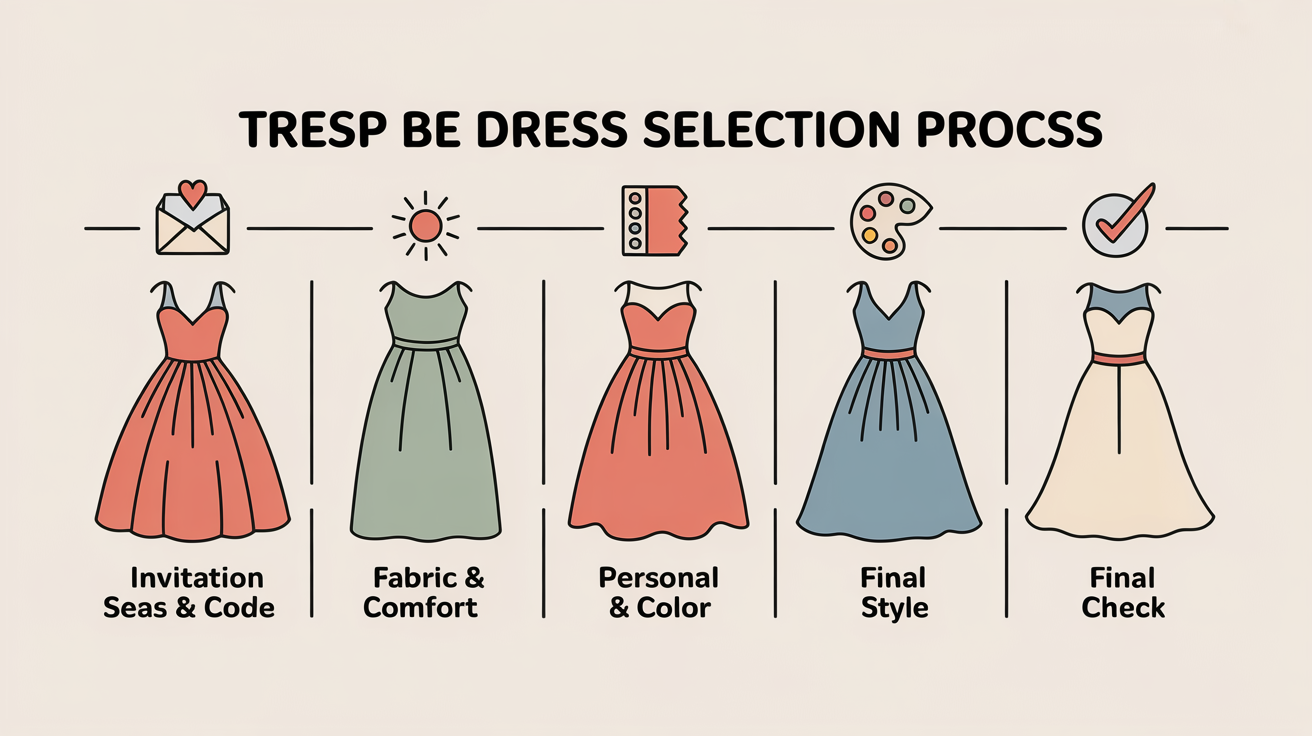
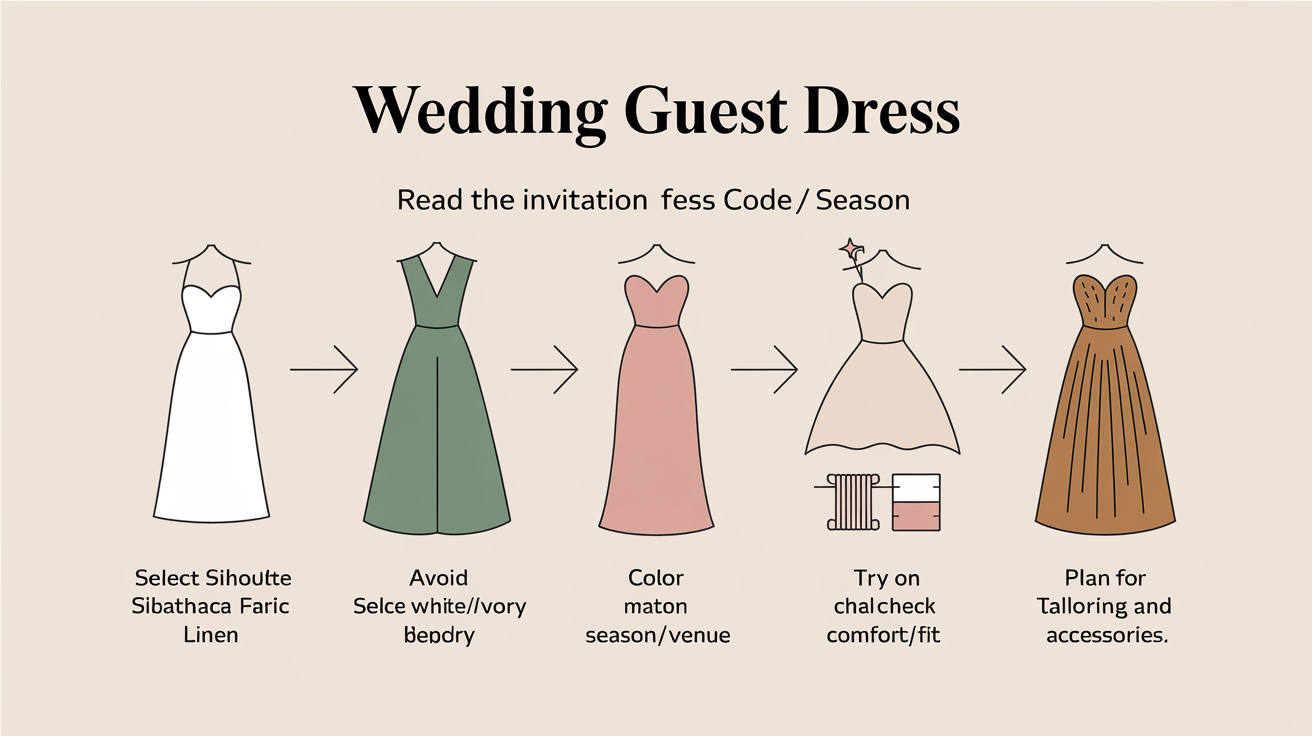
You want to feel quietly confident, comfortable, and right for the celebration. Each step below guides you toward a dress that honors the couple, moves with you all day, and feels like your own style - never forced.
- Confirm the Dress Code and Venue
Read the invitation closely. Look for clues: black tie, cocktail, semi-formal, garden, or beach. If nothing’s listed, check the venue’s website or ask the host. Black tie asks for floor-length gowns and formal shoes. Cocktail means midi or knee-length - minis fit only very casual events. If in doubt, it’s safer to go a touch more formal than underdressed.
- Consider the Season and Weather
Let time of year and location decide your fabric and length. Spring and summer weddings call for breathable fabrics - linen, organic cotton, chiffon. Midi or maxi styles stay comfortable in heat. For fall and winter, reach for velvet or satin, or add a wrap for outdoor ceremonies. Indoor venues allow lighter layers; outdoor settings might need a jacket just in case. Not checking the forecast is a common regret.
- Choose Your Silhouette for Comfort and Style
Decide if you want structure or movement. Flowy, relaxed shapes - soft sleeves, tiered skirts - make dancing and sitting easy. Prefer a closer fit? Look for gentle tailoring at the waist or bust. Always test how the dress feels sitting and walking. Comfort matters more than trends. Too tight or restrictive? Keep looking.
- Pick a Color that Honors the Couple and Season
Check the color palette on the invitation. Skip white, ivory, and cream - those are reserved. Jewel tones, navy, burgundy fit fall and winter. Pastels, dusty blue, blush, and sage suit spring and summer. Not sure? Neutral earth tones rarely clash. Don’t match the bridesmaids. Aim for gentle distinction, not center stage.
- Mind Subtle Patterns and Personal Touches
If you like prints, keep them soft - tiny florals, quiet stripes. Avoid bold or glittery patterns unless the invitation encourages it. Accessories or a subtle pattern add personality without overwhelming. Respect the couple’s vision. This balance works for other milestones too - see our graduation dress guide for more on blending individuality with occasion.
- Focus on Fabric Quality and Breathability
Natural fibers - organic linen, cotton, TENCEL™ - feel gentle on skin and breathe through ceremony and dancing. Synthetics or blends can trap heat or itch. Try the dress on and move around before deciding. Quality fabrics and thoughtful construction help the dress last through years of celebrations. For more, see our gentle guide to choosing a homecoming dress.
- Double-Check Fit and Allow for Tailoring
Measure yourself and compare to the size chart - don’t trust labels alone. If a dress needs a tweak, plan for tailoring. Too long or loose is fixable; too tight often isn’t. Rushed, last-minute alterations lead to stress and less-than-ideal results. Try to allow at least two weeks for adjustments before the event.
This approach centers your comfort and the celebration, keeping choices simple and intentional - so you feel truly at ease all day.
Dress Mistakes Wedding Guests Make (And How To Avoid Them, Gently)
Wearing white, cream, or very pale metallics is the classic misstep. These shades can blur with bridal attire in photos and sometimes draw eyes for the wrong reason. Even with good intentions, regret often follows once the pictures come back.
Choosing White or Bridal Tones
It’s easy to end up with a dress that looks bridal - ivory, pale gold, or soft blush - especially under different lighting. Some labels call a dress “champagne” when it’s nearly white in person. Shopping online makes this even trickier; colors shift between screens and daylight. Often, the search for something “timeless” nudges guests toward these shades.
The gentle rule: skip any color that could be mistaken for a wedding dress. If a hue feels borderline, ask the couple or someone you trust. Go for deeper colors - navy, sage, burgundy, or muted florals. Earth tones and rich neutrals always feel calm and respectful. Still unsure? The guide to avoid common cocktail dress mistakes breaks down how color choices play out in real settings.
Ignoring the Dress Code (or Overdressing)
Sequins at a morning garden ceremony. Stiff satin at a beach gathering. These mismatches usually happen when you grab a dress you already own or misread the invitation’s hints. Sometimes, the venue or time of day sets the tone, but it’s easy to miss.
Pause before deciding. Read the invitation carefully. “Black tie,” “cocktail,” “casual garden,” and “formal evening” each mean something different. If it’s unclear, ask the couple for a nudge. When in doubt, choose subtle patterns, classic shapes, and gentle embellishments. Understated always feels right and never overshadows the couple.
Overlooking Fit and Tailoring
A dress that’s too tight or loose, or not hemmed for your height, leads to distraction and discomfort. Many guests skip alterations, hoping standard sizing will do. The result? Fidgeting, pinched seams, or tugging at straps all night.
- Try on your dress right away - walk, sit, lift your arms, and move like you would at the event.
- If it gaps or pulls, visit a tailor for quick adjustments.
- Pick a cut that lets you move freely; avoid styles that demand constant fussing.
Comfort shows. A tailored fit lets you relax and join the celebration fully.
Wearing Synthetic or Heavy Fabrics in Hot Weather
Polyester, acetate, and other heat-trapping blends often spoil summer or destination weddings. They might look elegant on the hanger but turn stifling under the sun. Sweat and irritation follow. Fabric content gets overlooked when style or color takes priority.
Check the label for natural, breathable fibers. Organic linen, cotton, and TENCEL™ let skin breathe through the day. Lightweight linings and open weaves help even structured dresses feel light. When your dress is comfortable, every moment feels easier - especially when you’re dancing in the heat.
Dressing With Confidence: Trusted Resources and Tools For Your Next Event
The right resources help you read between the lines of any invitation and choose an outfit that feels quietly right. Look for guides that explain dress codes, consider season and setting, and offer clear, accessible sizing. The best ones guide you from uncertainty to ease - never pressure, never fuss.
Decoding Dress Codes and Event Language
Precise definitions - “cocktail,” “formal,” “semi-formal” - clear up the guesswork. Choose guides that break down dress code language and show real-world examples. Context matters: time of day, venue, and season all shape what’s expected. A vague request like “garden chic” becomes a set of cues for color, fabric, and silhouette when explained well.
For details, seek resources that align dress length and embellishment with each code. A formal wedding usually means midi or ankle-length, sometimes tea-length, with an elevated, tailored look and thoughtful embellishments. Cocktail attire means you can reach for shorter, structured shapes. The best guides mention footwear and accessories, too - so nothing feels like an afterthought. For deeper context, visit our fabric and occasion explainer for wedding guest attire.
Size Guides and Inclusive Fit Tools
A standard size chart is just the start. The most helpful tools offer garment measurements, fit notes for different body shapes, and photos of real people in each size. Some include details on fabric stretch or drape. Look for brands or guides that show dresses on a range of body types, not just one. Plus-size guests deserve the same clarity and care - see our plus-size fashion guide for specifics on fit and tailoring.
- Garment-specific measurements - bust, waist, hip, length
- Conversion charts for international sizing
- Model height and size for reference
- Fit notes for various builds
All these details help you select a dress that lets you move, celebrate, and feel comfortable from ceremony to last dance.
Fabric and Seasonality Filters
Filters for fabric type, weight, and breathability matter - especially for outdoor or destination weddings. Prioritize guides that describe how each material feels and functions. Linen, organic cotton, TENCEL™ - these keep you cool through long, bright days. Heavier weaves work for autumn or formal evenings. Want to understand how fabric choices affect comfort and longevity? See our resource on quality materials and caring for natural fibers.
Choosing organic, chemical-free fabrics means gentle comfort for your skin and lasting beauty for your wardrobe. The right material brings a sense of ease to every gathering.
Feel Good, Look Right: Your Confident Path to Wedding Guest Style
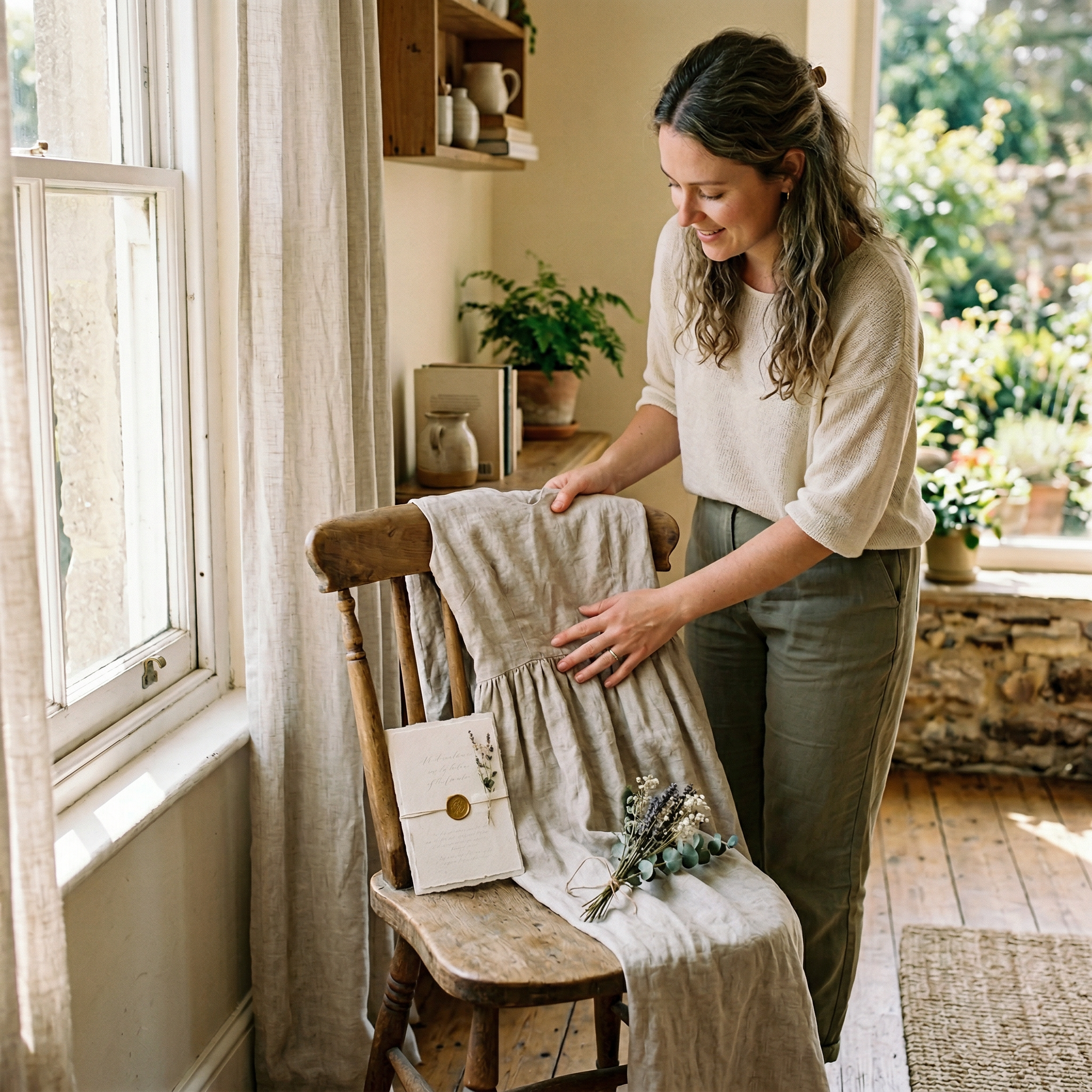
Your best wedding guest look starts with comfort and quiet confidence. The right dress fits the season, honors the venue, and feels natural from the first toast to the last dance. Ease lets you blend into the celebration, honoring both the couple and yourself.
Read the invitation and dress code, then let the season and setting guide your choices - fabric, length, color. For a summer garden, maybe a light midi. For a winter evening, a deeper hue and long sleeves. Choose a silhouette that lets you move, not one that restricts. Quality materials matter: natural fibers breathe and age beautifully, so your dress feels right now and for years to come. Accessories and layers add a touch of personality, but keep them gentle, never distracting. Always, dress in a way that feels like you - comfortable, present, part of the moment. For more on balancing comfort and context, see our guide on special occasion dressing.
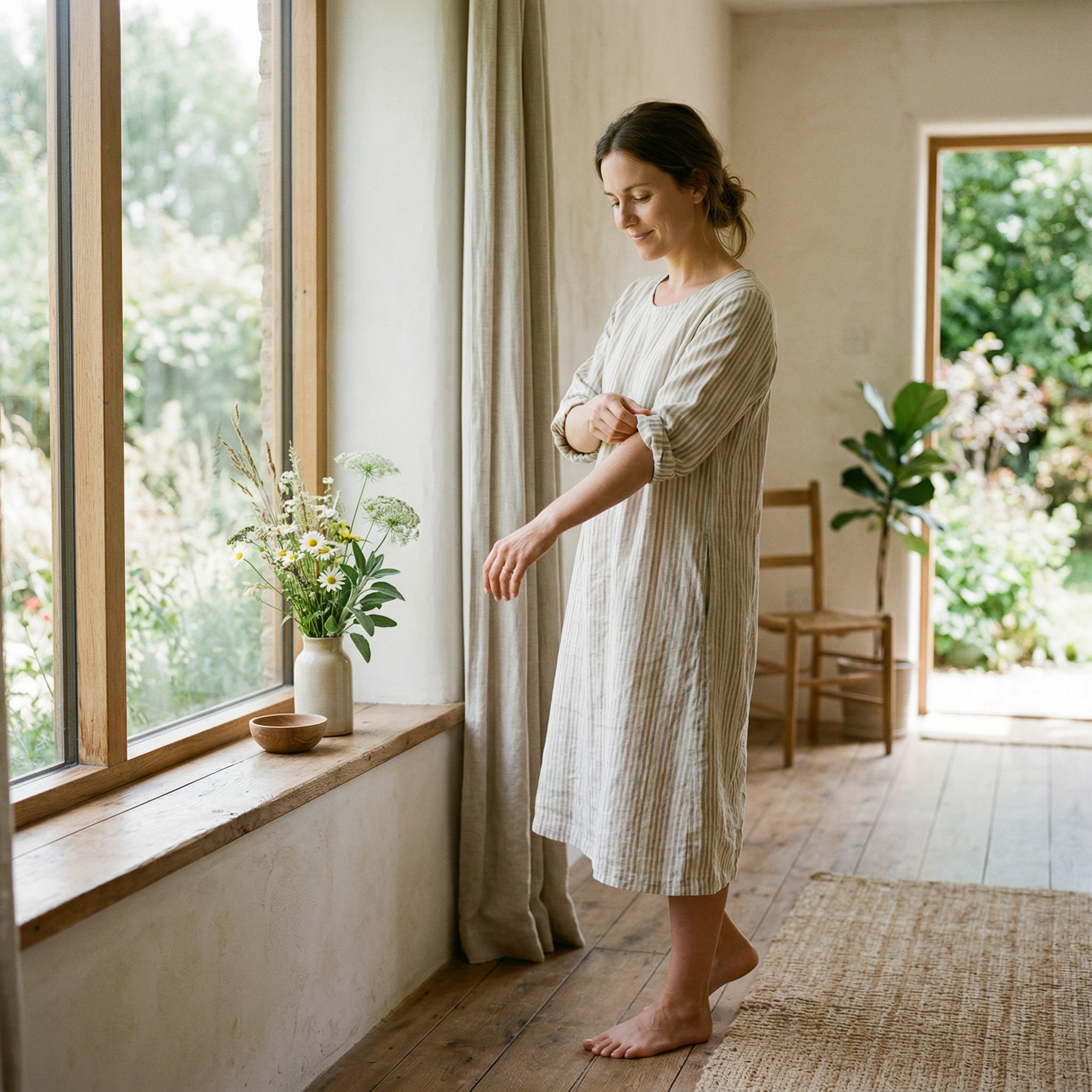
Choosing a thoughtfully made piece - like The Linen Harriet Dress in organic, chemical-free linen - means comfort and lasting ease for your family. Every detail, from the soft handfeel to the classic shape, supports your confidence for this celebration and the next. Less fuss, more room for what matters most: making memories together.
In our new handmade Desert Stripe pattern, this very special organic linen dress features billowy, cropped sleeves, and...
$59.00
Learn MoreFrequently Asked Questions
How far in advance should I buy a wedding guest dress and schedule alterations to guarantee the right fit?
Buy your wedding-guest dress 6–12 weeks before the event (order ~3 months ahead if it’s made-to-order or ships internationally). Schedule alterations to start ~4–6 weeks before the wedding with a final fitting 1–2 weeks out to guarantee the fit. Bring the undergarments and shoes to every fitting, and budget roughly 10–20% of the dress price for tailoring (higher for intricate gowns).
What shoe styles and soles work best for outdoor venues (grass, gravel, sand) to avoid sinking or damage?
Pick shoes with wide, low, stiff soles or platforms (block heels, wedges, flatforms) and rubber outsoles with tread - these spread your weight and prevent sinking, while thin stilettos or soft dress soles concentrate pressure and sink. For gravel choose closed‑toe shoes with firm rubber lug soles or trail runners for protection and traction; for sand choose flat sandals, espadrilles, or neoprene/water shoes that won’t plunge or trap grit. Prefer synthetic or treated leather/waterproof materials (not suede) for easy cleaning, and use heel‑stoppers/sole protectors at formal grass events.
How do I choose undergarments and shapewear that stay invisible under sheer, light-colored, or form-fitting guest dresses?
Pick a nude shade that matches your skin undertone (fair: light beige; warm: caramel/tan; deep: cocoa) and choose seamless, laser-cut or bonded-edge microfiber pieces (no lace or shiny finishes) - options: adhesive/stick-on or convertible bras for strapless/low-back, a no-show thong or seamless high‑waist brief for the hip/seat, and a mid-control bodysuit or mid-thigh shorts for smoothing under form‑fitting dresses. For sheer or very light fabrics use skin‑tone stick‑on cups or a molded-cup strapless bra and sheer nude hosiery (not white), and avoid textured seams by choosing bonded hems or silicone stay‑put bands. Always buy the correct size (don’t size down), try the complete look in natural light and sit/walk to check for lines or bulging, and secure slips with double‑sided fashion tape where needed.
Is it better to rent a formal gown for a one-off black-tie wedding - what are the pros, cons, and tips for renting?
Yes - for a one-off black‑tie wedding, renting is usually better because you can wear a designer floor‑length gown at a fraction of the purchase price (often ~10–30% of retail) and avoid long‑term storage and cleaning costs. Pros: cost‑effective, access to high‑end styles, no long‑term care; cons: limited size/fit and alteration options, potential damage fees or deposits, and strict shipping/return windows. Tips: try in person or reserve two sizes, book 2–4 weeks (or earlier in peak season), inspect the gown on pickup for stains/beading, confirm alteration, insurance and damage‑fee policies, and arrange proper shoes/undergarments for the final hem and fit.
How should I clean, store, or prepare a wedding guest dress after the event if I plan to resell or wear it again?
Inspect and treat stains immediately: blot (don’t rub) with a clean cloth, test any spot-cleaner on a hidden seam, avoid hot water or the dryer, and for silk, satin, sequins, heavy beading or persistent stains take it to a reputable professional dry cleaner and tell them what to treat. Remove spare pins/receipts and steam (not iron) to remove wrinkles, then store in a cool, dark, dry place on a padded hanger or flat wrapped in acid-free tissue inside a breathable garment bag (avoid long-term plastic bags and attics/basements; use silica gel packs if humid). Repair loose beads or seams, photograph front/back/labels, record exact measurements and condition, and keep any cleaning receipts or original tags/box to maximize resale value.
What maternity dress styles and fabrics are most flattering and comfortable for guests in different trimesters?
Choose soft, breathable natural fibers and stretch knits tailored to each trimester: first trimester - fitted wrap, slip or tunic T‑dress in jersey/modal or cotton blends for a flattering, “normal” silhouette; second trimester - empire‑waist, A‑line, ruched or wrap midis in viscose/ LENZING™ ECOVERO™ or 100% cotton muslin (examples: floaty ECOVERO viscose with a bit of elastane or organic cotton muslin Meadow) for adjustable comfort around a growing bump; third trimester - maxi, smocked, belted or wrap styles in ribbed knit, bamboo or stretchy jersey (and sweater/ribbed knits for cooler days) with side slits for breathability. Avoid stiff, cheap synthetics and scratchy seams - prefer OEKO‑TEX/organic certified fabrics and small elastane blends (2–6%) for shape retention, stretch, and postpartum/nursing friendliness.
How can I interpret vague invitation dress codes like "festive," "garden casual," or "summer cocktail" so I don’t underdress or overdress?
Treat "festive" as polished cocktail: men in a suit or blazer (tie optional), women in a dress or midi with playful details like sequins or statement accessories. "Garden casual" = smart‑casual and weather‑ready: sundress, skirt or neat trousers for women; button‑down with chinos or dark jeans and desert boots/loafers for men - avoid sneakers or flip‑flops. "Summer cocktail" means cocktail attire in light fabrics and colors: men in a lightweight suit or blazer and dress shirt, women in a cocktail or midi dress in cotton/linen/chiffon/satin with dressy sandals or heels. When unsure, check venue/time or ask the host, bring a blazer or wrap, and err one notch dressier rather than more casual.
Luis Gamardo built a modern job search framework for a broken recruiting system. His approach teaches how to send cold emails at every stage of the hiring process, so qualified candidates can get noticed by the right people at the right time - including before jobs are even posted.