

Milestone dresses typically cost about 30% more than the base price after alterations, undergarments, shoes, and preservation; plan for these hidden expenses and invest in quality fabric and tailoring to secure comfort and lasting memories. The guide categorizes dress codes (cocktail, black tie, wedding guest), recommends season-appropriate fabrics and colors, and gives practical tips - prioritize fit, breathable materials, and slow-fashion choices to reduce stress.
In our new handmade Desert Stripe pattern, this very special organic linen dress features billowy, cropped sleeves, and...
$59.00
Learn MoreWhy The Dress Matters: The True Cost Of Each Milestone Moment
Your dress for a milestone event carries more than a price tag. Most families spend up to 30% beyond the initial budget once alterations, undergarments, shoes, and preservation are counted. These hidden costs often reshape your plans, sometimes quietly and sometimes sharply.
Each major celebration - wedding, graduation, or family gathering - marks your family's story. The dress you choose shapes how you move, how at ease you feel, and the memories that linger. Comfort, confidence, and beauty matter, but so do the small details: a hem that sits just right, fabric that breathes, seams that don't tug. Too often, the search for the right dress brings stress, not delight. Options multiply. Unspoken expenses creep in. Suddenly, what should feel meaningful becomes a source of worry.
This guide is here to steady you. You'll get gentle, honest advice - practical tips on what to expect, which costs to prepare for, and why quality fabric and tailoring deeply affect both your comfort and your memories. Along the way, you'll see how small, conscious choices - like understanding fabrics or supporting slow fashion - quietly honor both your celebration and your values.
Mapping Special Occasion Dresses: Types, Events, and What Sets Each Apart
Dress codes shape your choices - event, season, and how you want to feel all matter. Cocktail, black tie, and family gatherings each bring their own etiquette, fit, and subtle cues. Knowing these categories helps you find a dress that feels right for the moment.
Cocktail Dresses and Semi-Formal Events
Cocktail dresses handle a wide range of celebrations quietly and well. These knee-length or midi styles balance polish with comfort - ideal for evening parties, weddings, or work events. Length, fabric, and accessories shift with the season and setting. For gentle guidance, visit how to interpret a cocktail dress code and choose what feels right for you.
Formal, Black Tie, and Gala Gowns
Black tie and formal events - think galas or milestone dinners - ask for floor-length gowns or refined separates. Rich fabrics like velvet, silk, and heavy satin mark the season, especially in winter. Details matter: deeper colors, tailored lines, and thoughtful accessories signal care. See what sets formal and black tie apart from cocktail attire and why these choices hold meaning at the most elegant gatherings.
Wedding Guest, Mother-of-the-Bride, and Family Gatherings
Weddings, graduations, and family moments each bring quiet traditions. Spring and summer call for lighter fabrics, softer colors. Deeper hues or gentle shimmer fit autumn or evening. Choosing for yourself or in a supporting role? Find gentle advice for selecting a wedding guest dress that feels respectful and personal.
Personal Style, Fit, and Color Considerations
Every occasion carries its own mood, but comfort remains constant. Notice how a dress fits as you move - breathable fabrics and easy seams matter more than trends. Color can nod to tradition or simply reflect your mood. Accessories should feel like an extension of you. These subtle choices help you feel at ease, no matter how formal the day.
Smart Choices: What To Consider Before Buying Your Milestone Dress
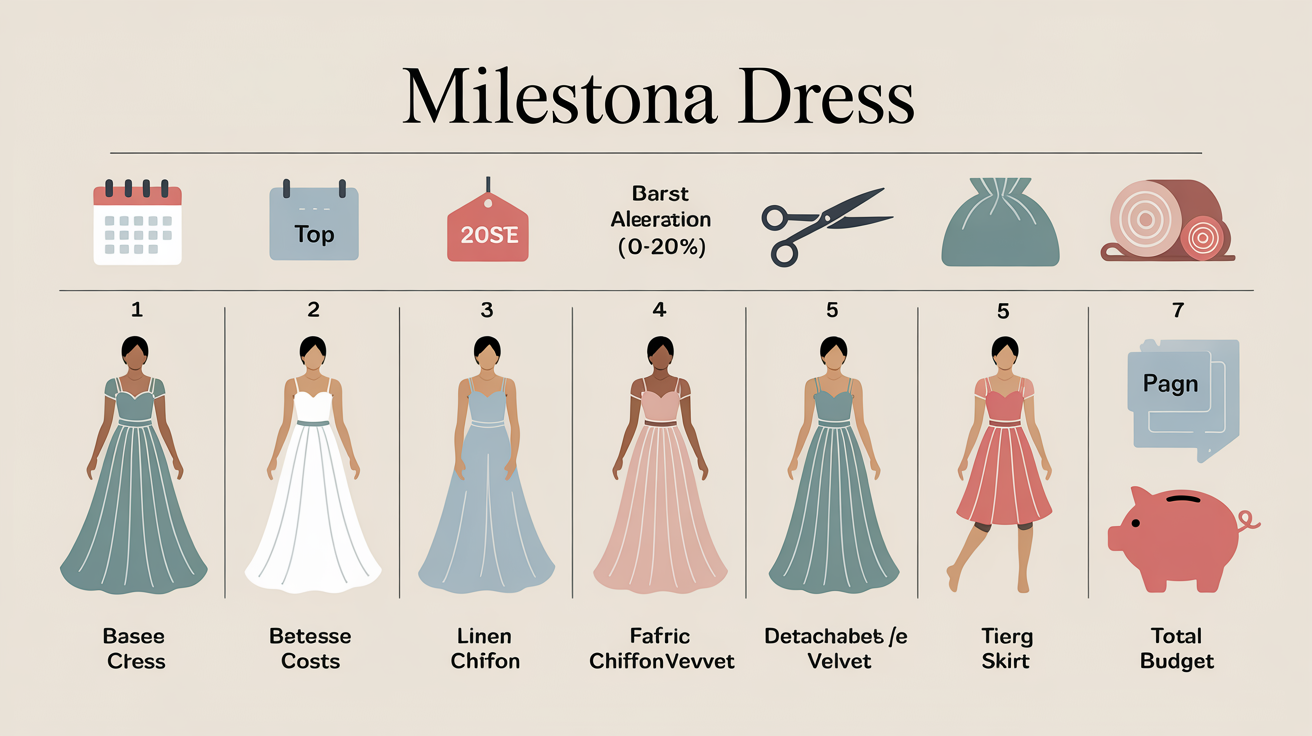
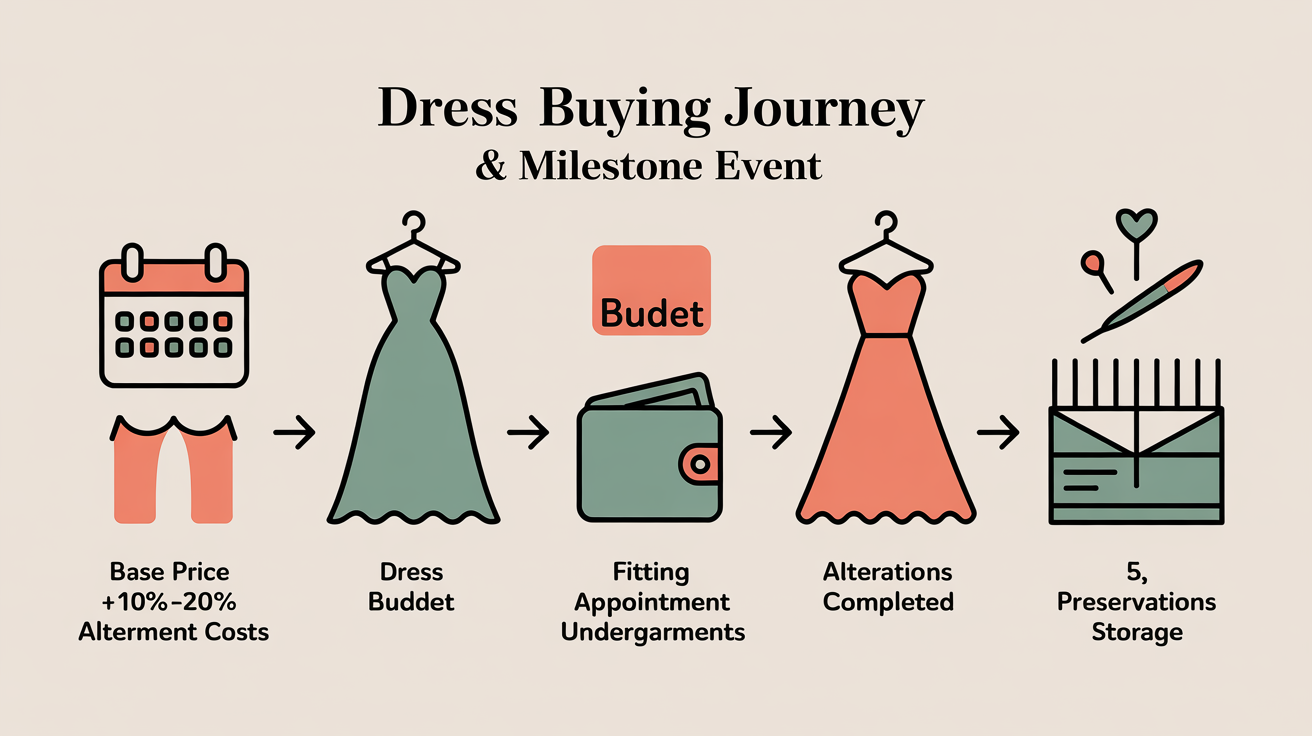
The most meaningful decision isn’t just which dress you choose - it’s how you plan for the whole experience. Your dress budget stretches beyond the price tag. Tailoring, special undergarments, and preservation often add 10–20% or more to your total. Quiet preparation, both emotional and practical, spares your family from last-minute expenses that unsettle your plans.
Budgeting for More Than the Dress
The dress is only one piece of the investment. Alterations. Support pieces. Accessories. Aftercare. Each adds to your real cost. Extra needs - like steaming, preservation, or a travel garment bag - often appear after you’ve already set your budget. Map out every element of your look before you start shopping. Find the most frequent budgeting pitfalls in common fabric shopping mistakes that waste your money and see how to protect your investment, step by step.
The Alteration Question: How Much Will You Change?
Very few milestone dresses fit perfectly off the rack. Bridal and formal sizing follows standard charts, not your child’s unique shape. Expect some tailoring. Hemming, seam adjustments, reshaping the bust, adding structure - each change affects both your timeline and your budget. Set aside 10–20% of the dress price for tailoring, even if the dress looks close at first. See real tailoring cost comparisons in elegant white graduation dress styles for every personality to understand how fit and style complexity shift your final spend.
Choosing Undergarments and Support Pieces
Support pieces shape the way the dress moves and feels. The right bra, slip, or shapewear smooths the silhouette and keeps everyone comfortable. Most boutiques don’t include these in the dress price. Some dresses need specialty or smooth options - no visible lines, no shifting fabric during long celebrations. Always bring your chosen undergarments to fittings. Otherwise, you risk surprise tailoring costs. Explore how support pieces influence fit and budget in our graduation dress style comparison.
After the Event: Cleaning, Preserving, and Storing Your Dress
What happens after the event? Some families tuck the dress away as a keepsake. Others resell or donate. Each choice brings its own considerations. Cleaning and preservation guard against yellowing and wear, but these services require time and add expense. For special pieces, a high-quality garment bag or storage box can be another line in your budget. Find advice on practical storage and preservation costs in our guide to avoiding common fabric shopping mistakes.
Avoiding Costly Pitfalls: Common Mistakes When Shopping For Occasion Dresses
Last-minute tailoring shocks and overlooked fit issues drain more family budgets than you might expect. Buying a dress on impulse - without checking how it moves, feels, or fits - often leads to disappointment. Research confirms: small details, like proportion and fabric quality, matter. A dress that rides up, pinches, or never feels quite right will likely get worn only once, then forgotten in the closet.
- Assuming alterations are optional. Most occasion dresses need some adjustment, which increases final costs and can delay your timeline - see real-world tailoring costs and alteration surprises.
- Choosing based on trends or popularity, then finding the fabric is stiff, itchy, or hard to care for - read about the risks of poor fabric choices and care mistakes.
- Skipping fittings with the right undergarments. This can cause unexpected lines or poor fit, resulting in extra tailoring or last-minute dashes for solutions - find reminders in our what not to forget at fittings guide.
- Missing proportion and hem details. Hems that hit at the widest part of your calf or fall too short can throw off your whole silhouette - see practical advice in common dress fit mistakes.
- Forgetting about storage and cleaning. After the event, improper care leads to yellowing, fabric wear, or loss of value - prevent this with our fabric care and preservation tips.
Slow down. Plan for the details that excitement often hides. Use a detailed pre-purchase checklist. Simple fabric care and mindful storage extend the life of each special piece, so your family can enjoy it - season after season.

Your Next Step: Choosing With Confidence For Every Milestone
Your next move is simple - choose the occasion, clarify your style, and start with guidance tailored to the moment. Looking for a graduation dress that's both comfortable and memorable? Begin with our guide on finding the perfect graduation dress. You'll get advice on fit, color, and what feels best beneath a gown - so you can mark this milestone gently and with purpose.
If fabric and quality matter most to you, or if materials leave you uncertain, focus on our fabric fundamentals and tips for choosing quality. Feeling torn between options for weddings or formal events? Our occasion dress guide and real-life styling stories offer inspiration and clarity. Watching your budget or hoping for a dress that lasts? See our reminders on longevity and care - practical steps for a wardrobe that endures. Each path matches a different need. Choose what fits your moment now.
Honoring life’s moments should feel peaceful, never rushed. That’s why every dress we create, including our linen heirlooms from rare organic flax, is shaped by simplicity and gentleness. For a slower, more mindful approach to dressing, explore our collection of celebration dress guides - thoughtful resources for building a wardrobe that truly lasts.
Frequently Asked Questions
How many weeks or months before the event should I buy a dress and schedule alterations to ensure a perfect fit?
Buy your dress 4–6 months before the event (6 months ideal) so you have time for accessories, hair/makeup planning, and weight changes. Schedule alterations as soon as the dress arrives and allow 2–4 weeks for tailoring, with a final fitting about 2–4 weeks before the event - many seamstresses ask for 2–3 weeks lead time and some retailers recommend up to a month. If you plan to lose weight, buy earlier (6+ months) and plan the last fitting close to the wedding so the dress can be taken in rather than lengthened.
Is it more cost-effective to rent a designer gown, buy off-the-rack, or order a custom dress for a one-time milestone - and what factors should sway my decision?
Renting a designer gown is usually the most cost‑effective for a one‑time milestone, while off‑the‑rack formal gowns commonly run ~$175–$500 (examples: $175–$249 listings) and custom dresses typically cost $1,000+ and require weeks to months of lead time. Choose renting to minimize upfront cost and environmental footprint, off‑the‑rack for faster ownership with modest alteration costs, and custom only if you need a unique fit/design or sentimental keep; prioritize your budget, how often you’ll wear the dress, alteration and shipping timelines, and resale or sustainability concerns.
What is the safest way to pack and transport a formal gown for travel so it doesn't wrinkle, tear, or get stained en route to the venue?
Carry the gown as your carry-on in a breathable garment bag on a padded hanger, stuffing bodice, sleeves and any folds with acid‑free tissue and protecting the hem inside a clear plastic bag to avoid stains. Secure the hanger hook with a hair tie so it won’t slip, and either hang it in the plane/vehicle wardrobe or lay it flat across your suitcase (never tightly folded). Pack a small emergency kit (travel steamer or wrinkle‑release spray, stain‑remover pen, sewing kit and safety pins) and have a pro steamer or cleaner on call at the venue if heavy pressing is needed.
Which undergarments or shapewear work best with specific neckline and back styles (strapless, plunging, backless) without creating visible lines?
Strapless: choose a well‑fitted longline strapless bra or silicone adhesive (stick‑on) cups and, if you want torso smoothing, a strapless low‑back bodysuit with boning and silicone grippers - pick seamless microfiber or power‑mesh to eliminate seams and slippage. Plunging necklines: wear a U‑plunge/deep‑V plunge bra or adhesive front‑closure cups, or a plunge‑front shapewear bodysuit with molded cups and a V‑cut brief or thong to avoid a visible band across the cleavage. Backless: use adhesive backless bras or a low‑back converter, or a dedicated low‑U‑back shaping bodysuit with a bra shelf; pair with laser‑cut seamless thongs/G‑strings or stick‑on shaping panels and always try the undergarment with the finished dress to confirm no lines.
What are quick, safe ways to treat common stains (red wine, lipstick, oil) on delicate fabrics at the event or immediately afterward?
Blot immediately - never rub - and work from the fabric’s reverse with a clean white cloth. For red wine: blot, pour club soda or cold water, cover with salt or cornstarch to absorb, then gently dab with a diluted mild detergent; for lipstick: scrape off solids, dust with talc/cornstarch to lift oil, then carefully spot with isopropyl alcohol on a cotton swab (test first); for oil: sprinkle cornstarch or baking soda for 10–30 minutes, brush off, then apply a small dab of gentle dish soap diluted in cold water and rinse. If the item is silk, wool, or the dye looks unstable, stop and take it to a professional dry cleaner.
Which alterations typically give the biggest improvement in comfort and wearability (e.g., adding straps, bust cups, extra lining, hemming) and are worth the extra cost?
Hemming, bodice/bust tailoring (taking in, adding darts or a proper seam fit), and strap/support changes (adding or shortening straps, sewn-in bust cups or extra lining) give the biggest, most noticeable gains in comfort and wearability and are usually worth the extra cost. Hem adjustments are the simplest and most affordable way to make a dress feel custom; correcting the bodice fit eliminates rubbing, gaping, and shifting; and adding straps/cups or lining improves support and reduces the need for constant readjusting. Adding functional pockets is a high-impact, mid-cost tweak; trying to lengthen a hem or rework intricate beading/scallops is often expensive or impractical.
How can I choose and break in shoes that will stay comfortable for hours and won't snag or scuff delicate dress hems?
Pick low-to-mid block or kitten heels (≤2.5–3 in) with smooth leather or satin uppers, rounded/almond toes and rubber or leather soles and minimal embellishment so there’s nothing to catch hems. Break them in gradually: condition leather, use a shoe stretcher or wear with thick socks indoors for 20–30 minute sessions over several days, and add gel toe/forefoot pads and adhesive heel grips to eliminate hot spots. Prevent snags/scuffs by avoiding exposed stitching or hardware, buff any sharp sole/heel edges and seal them with clear nail polish or edge paint, fit rubber heel caps and sole protectors, and use a temporary ½" hem tape or an underskirt to keep delicate hems off the shoes while dancing.
Luis Gamardo built a modern job search framework for a broken recruiting system. His approach teaches how to send cold emails at every stage of the hiring process, so qualified candidates can get noticed by the right people at the right time - including before jobs are even posted.